On Amazon.com on 5 October 2026 the HS5 was $199.99 each and the A4V $539.00 each. Both are sold individually, so a stereo pair is $399.98 for the HS5 and $1,078 for the A4V, a gap of about $678. For that, ADAM lists an X-ART high-frequency driver that rotates, DSP-based tuning on each monitor and a 52Hz low end. The HS5 has 2,365 Amazon ratings; the A4V has 8, so there is far less buyer feedback to go on.
ADAM Audio A4V vs Yamaha HS5: Which Wins in 2026?
Yamaha HS5 wins on value for most home studios. ADAM Audio A4V vs Yamaha HS5: the A4V is $539 each against $199.99, about 2.7 times the price (2026).
Heads up: some links here pay us. If you buy through an EcoFlow or eufy link we may earn a commission, at no cost to you (that's Awin, in some countries). Amazon and other shop links pay us nothing right now. I haven't tested these products myself unless the page says so; the picks come from the specs and listings, and I'll tell you when I'm not sure. How I research · Editorial policy
Prices change daily on Amazon. Check today's price on the Yamaha HS5 before reading the full review.
ADAM Audio A4V
$539 each
VS
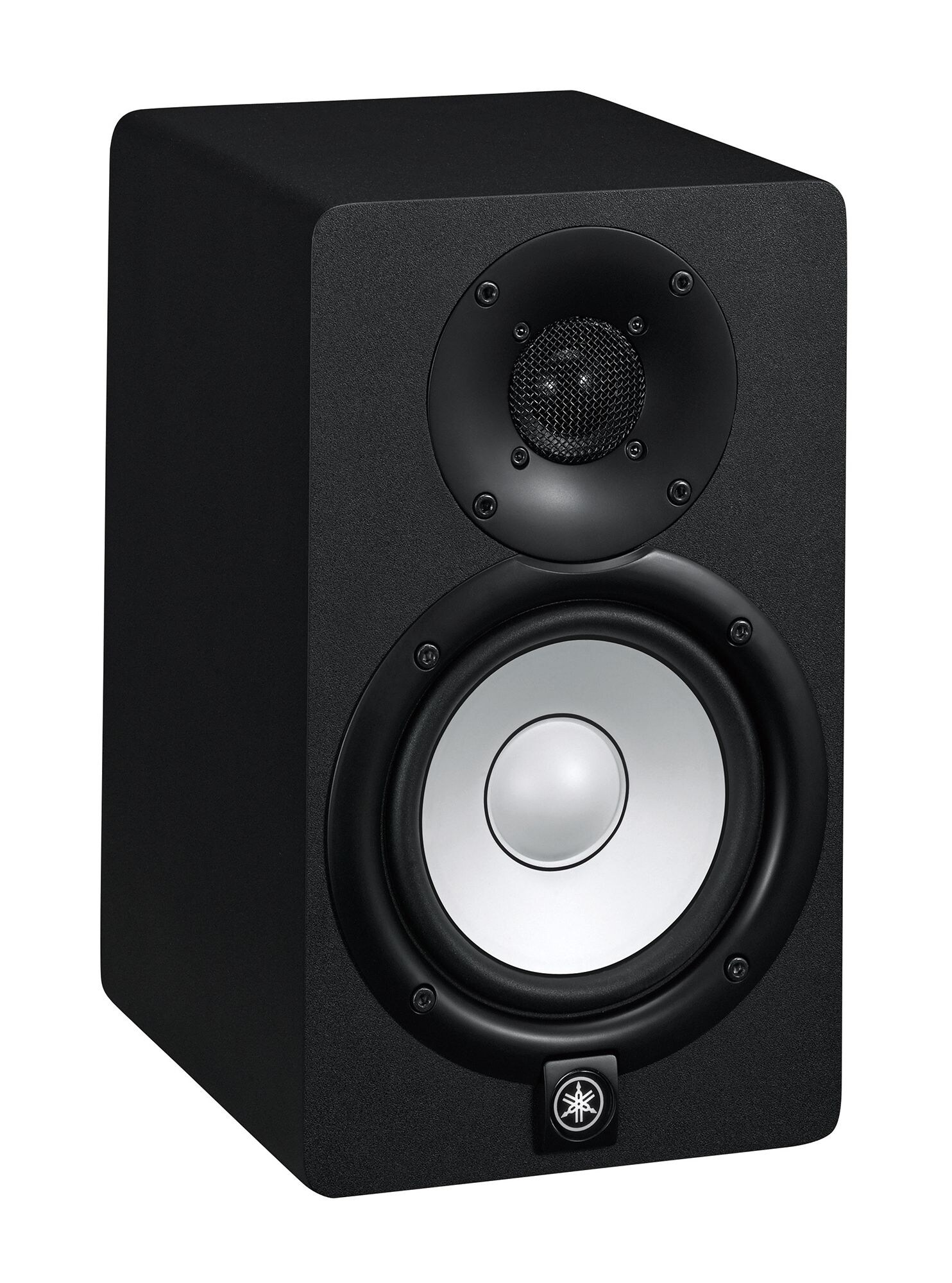
Yamaha HS5
$199.99 each
Quick Answer
Yamaha HS5 wins overall
These two are not really competitors on price. On Amazon.com on 5 October 2026 the Yamaha HS5 is $199.99 each and the ADAM Audio A4V is $539.00 each, so a stereo pair is $399.98 against $1,078. The HS5 has 2,365 Amazon ratings against 8 for the A4V. What the extra $678 a pair buys, per ADAM's listing, is a rotatable X-ART high-frequency driver, DSP-based tuning on each monitor and a lower listed bass figure (52Hz against 54Hz). We have not tested either monitor.
Specifications
| Feature | ADAM Audio A4V | Yamaha HS5 |
|---|---|---|
| Price | $539 each | $199.99 each |
| Frequency Range | 52Hz - 45kHz | 54Hz - 30kHz |
| Amplifier Power | 130W peak | 70W |
| Room Controls | DSP-based tuning (each) | Room Control + High Trim |
| Inputs | XLR and RCA | XLR and TRS |
Price and What It Buys
Winner: Price and What It Buys
Yamaha HS5
HS5 on price and track record. The A4V costs about 2.7 times as much.
Tweeter
ADAM lists the A4V with an X-ART high-frequency driver, which its listing says rotates, and a response up to 45kHz. ADAM positions X-ART as the full version of the accelerated ribbon technology used in a cut-down form (U-ART) in its T Series. Yamaha lists the HS5 with a conventional 1" dome tweeter and a response up to 30kHz. We have not tested either, so we cannot say how the two sound.
Winner: Tweeter
ADAM Audio A4V
A4V lists the higher top-end figure and the X-ART driver. We have not heard either.
Bass Extension
On paper the A4V has a smaller 4" woofer than the HS5's 5" but a slightly lower bass figure: ADAM lists 52Hz and Yamaha 54Hz. ADAM lists 130W of peak power and a maximum of 100 dB at one meter; Yamaha lists 70W and no maximum SPL. The gap is two hertz on paper and we have not measured either.
Winner: Bass Extension
ADAM Audio A4V
A4V, narrowly, on the listed figures.
Room Controls
Yamaha lists Room Control and High Trim switches on the HS5. ADAM lists DSP-based tuning on each A4V, with additional control through its software. They are different kinds of adjustment: switches on the Yamaha, digital tuning on the ADAM. We have not tested how either behaves in a room.
Winner: Room Controls
Tie
Different approaches. The A4V's is the more flexible on paper.
Final Verdict
Yamaha HS5 takes it
The Yamaha HS5 is the one we would start with: $199.99 each against $539 for the ADAM Audio A4V, with 2,365 Amazon ratings against 8. The A4V is the other choice if the rotatable X-ART driver, DSP-based tuning and a 52Hz low end are what you want and about $678 more for a pair is acceptable. Every figure here comes from the makers and the Amazon listings; we have not tested either monitor. If you are choosing between ADAM models rather than brands, the T5V is $220 each and the closer competitor to the HS5 on price, and our head-to-head covers that matchup.
Frequently Asked Questions
That depends on whether you want what ADAM lists: a rotatable X-ART driver, DSP-based tuning on each monitor and a 52Hz low end. It costs $539 each against $199.99 for the HS5, so a stereo pair is $1,078 against $399.98. We have not tested either monitor.
The A4V is from ADAM's A Series and lists an X-ART high-frequency driver with DSP-based tuning on each monitor. ADAM's T5V is from its T Series and lists a U-ART tweeter with low and high shelf filters. The T5V is $220 each ($440 a pair), so it is far closer to the Yamaha HS5 on price and is the more direct comparison.
Yes, marginally. ADAM lists 52Hz for the A4V with a 4-inch long-excursion woofer and 130W of peak power; Yamaha lists 54Hz for the HS5 with a 5-inch woofer and 70W. These are the makers' figures; we have not measured them.
Per monitor. The A4V is $539 and the HS5 $199.99, so a stereo pair is $1,078 and $399.98. This guide used to quote the A4V at roughly $500 each.