Power Station for an Oxygen Concentrator: Outage Backup (2026)
The EcoFlow Delta 3 has the highest rated output of the three power stations compared here. EcoFlow and Jackery statements on medical use are included.
Heads up: some links here pay us. If you buy through an EcoFlow or eufy link we may earn a commission, at no cost to you (that's Awin, in some countries). Amazon and other shop links pay us nothing right now. I haven't tested these products myself unless the page says so; the picks come from the specs and listings, and I'll tell you when I'm not sure. How I research · Editorial policy
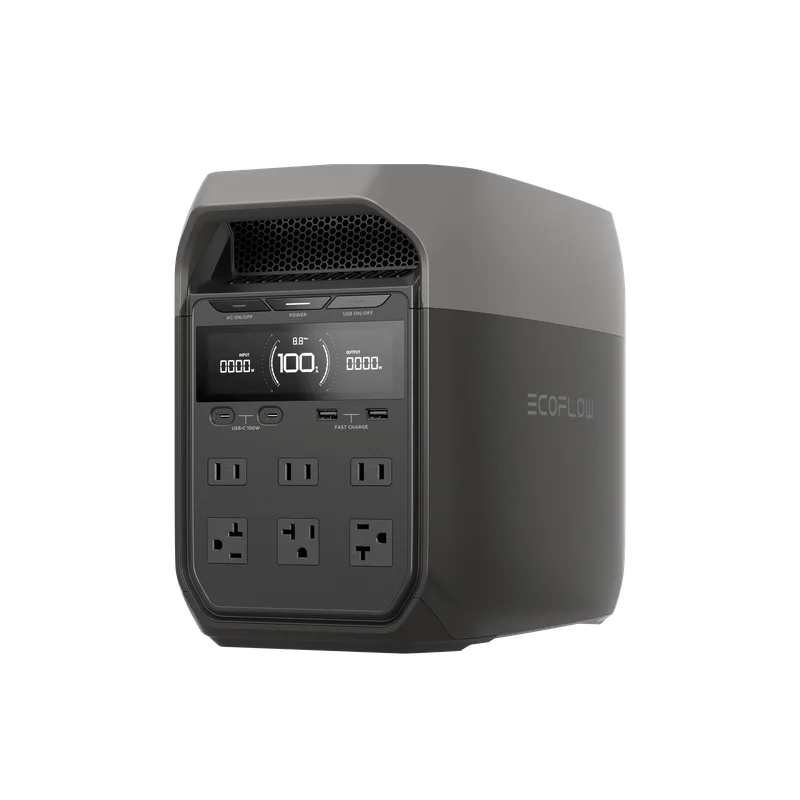
EcoFlow Delta 3
On published specifications the EcoFlow Delta 3 has the highest rated output of the three power stations compared here: 1800W continuous and 1024Wh, with EcoFlow extra batteries up to 5kWh according to EcoFlow. The Jackery Explorer 1000 v2 lists 1500W and 1070Wh. The Bluetti EB3A lists 600W and 268Wh and has been discontinued by Bluetti. Compare each unit's rated output and watt-hours with the rated draw in your own device's manual. The makers' own statements on medical use: EcoFlow says its power stations are not intended to power life-sustaining medical equipment, and Jackery says its power stations are not recommended for use with medical devices or life-support equipment. Confirm with your device's maker before use.
Check Price on AmazonAt a Glance
| Feature | EcoFlow Delta 3 | Bluetti EB3A | Jackery Explorer 1000 v2 |
|---|---|---|---|
| Price | $599 sale, $699 list | $269 | $599 |
| Continuous Output | 1800W continuous | 600W continuous (1200W surge) | 1500W continuous |
| Watt-hours at a 400W Load | ~2.5 hours at 400W (Wh / W, before losses) | ~0.7 hours at 400W (Wh / W, before losses) | ~2.7 hours at 400W (Wh / W, before losses) |
| Expandability | 1024Wh (expandable to 5kWh) | 268Wh (LiFePO4) | 1070Wh (LiFePO4) |
| Weight | 12.5kg | 4.6kg | 10.8kg |
Quick Comparison
Our Top Picks
EcoFlow Delta 3
The highest rated output of the three: 1800W continuous and 1024Wh, with extra batteries up to 5kWh, a sub-10 ms UPS switchover and a 5-year warranty, all per EcoFlow. It replaced the Delta 2, which EcoFlow no longer sells in the US.
- 1800W continuous output (2200W X-Boost), per EcoFlow
- 1024Wh, expandable to 5kWh with EcoFlow extra batteries
- 1500W wall charging
- Under 10 ms UPS switchover, per EcoFlow
- 4000 cycles to 80% capacity and a 5-year warranty, per EcoFlow
- EcoFlow's US spec sheet does not state the output waveform
- EcoFlow says its power stations are not intended to power life-sustaining medical equipment
- 12.5 kg (27.6 lb)
- Extra batteries add cost
Bluetti EB3A
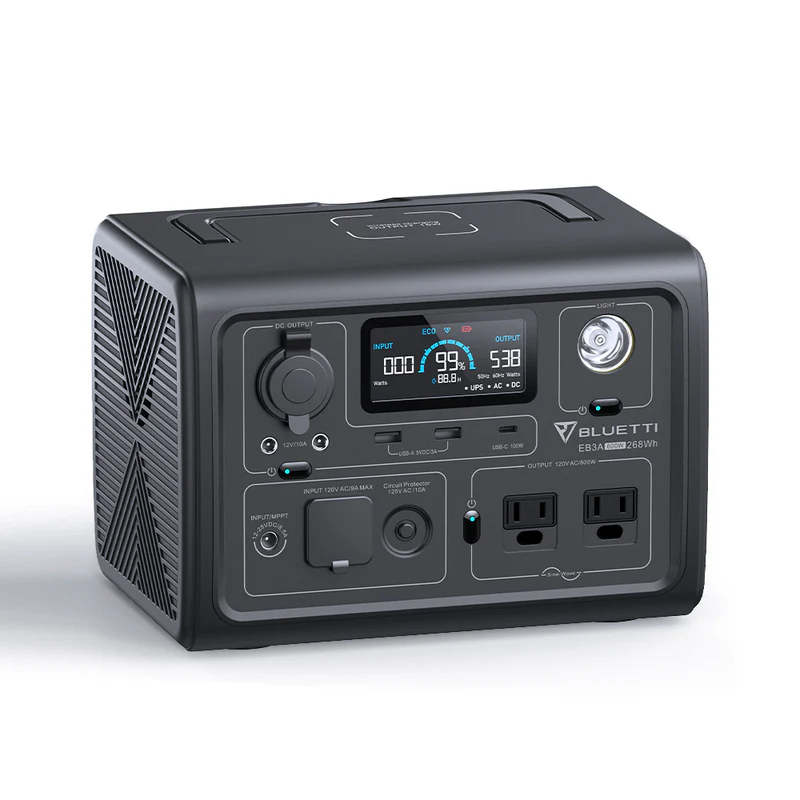
A compact 268Wh unit with a 600W inverter (1200W surge) per Bluetti. Bluetti has discontinued it, so availability depends on retailer stock.
- 600W AC pure sine wave inverter (1200W surge), per Bluetti's product page
- LiFePO4 chemistry
- Lowest price of the three
- 268Wh is the smallest capacity of the three
- 600W continuous is the lowest output of the three
- Bluetti has discontinued the EB3A: its own product page is marked "(Discontinued)", so availability depends on retailer stock
Jackery Explorer 1000 v2
Lists 1070Wh and a 1500W inverter. Jackery says its power stations are not recommended for use with medical devices or life-support equipment.
- 1070Wh, the largest capacity of the three on paper
- 1500W continuous output
- LiFePO4 battery
- Jackery says on its product page that its power stations are not recommended for use with medical devices or life-support equipment
- 1500W is below the Delta 3's 1800W
- Jackery's product page does not state the output waveform
How This Was Researched
We compare specifications published by the makers: continuous output, watt-hours, charging, expandability, and the output waveform where the maker states it. We have not tested these units with any medical device and make no claim that they are suitable for one. EcoFlow prices were read from its stores on 2 October 2026. Statements attributed to a maker are the maker's own.
Frequently Asked Questions
EcoFlow says its power stations are not intended to power life-sustaining medical equipment, including hospital-grade CPAP devices, and advises confirming compatibility with the device maker or your healthcare provider. Jackery says on its product page that its power stations are not recommended for use with medical devices or life-support equipment. Bluetti's EB3A product page says nothing on medical use. These are the makers' statements, not ours.
Compare the continuous output in watts and the watt-hours the maker lists with the rated draw in your own device's manual. Runtime is roughly watt-hours divided by the load in watts, before conversion losses. Also check whether the maker states the output waveform and whether it states a position on medical use.
The EcoFlow Delta 3 lists 1800W continuous (2200W in X-Boost mode). The Jackery Explorer 1000 v2 lists 1500W and the Bluetti EB3A 600W (1200W surge).
EcoFlow's US spec sheet for the Delta 3 and Jackery's product page for the Explorer 1000 v2 do not state it. Bluetti's page lists the EB3A as a pure sine wave inverter.
EcoFlow Delta 3
The highest rated output of the three: 1800W continuous and 1024Wh, with extra batteries up to 5kWh, a sub-10 ms UPS switchover and a 5-year warranty, all per EcoFlow. It replaced the Delta 2, which EcoFlow no longer sells in the US.
Check Price on Amazon