The architectural approach here is totally divergent. EcoFlow essentially designed a slick, vertically stacking monolith that visually resembles a high-end enterprise server rack. You snap additional 6kWh batteries on top of each other, terminating in a single inverter "hat." It looks stunning in a finished suburban garage. Bluetti separates the brain from the brawn entirely; the Apex 300 head unit ships with a modest 2,764.8Wh built in, but its real capacity comes from wiring in independent B300K or B500K battery modules placed beside it.
EcoFlow Delta Pro Ultra vs Bluetti Apex 300: Whole-Home Battery (2026)
EcoFlow Delta Pro Ultra wins on modularity, scaling to 90kWh with 7.2kW output. Two whole-home batteries compared on capacity and expandability.
Heads up: some links here pay us. If you buy through an EcoFlow or eufy link we may earn a commission, at no cost to you (that's Awin, in some countries). Amazon and other shop links pay us nothing right now. I haven't tested these products myself unless the page says so; the picks come from the specs and listings, and I'll tell you when I'm not sure. How I research · Editorial policy
Prices change daily on Amazon. Check today's price on the EcoFlow Delta Pro Ultra before reading the full review.
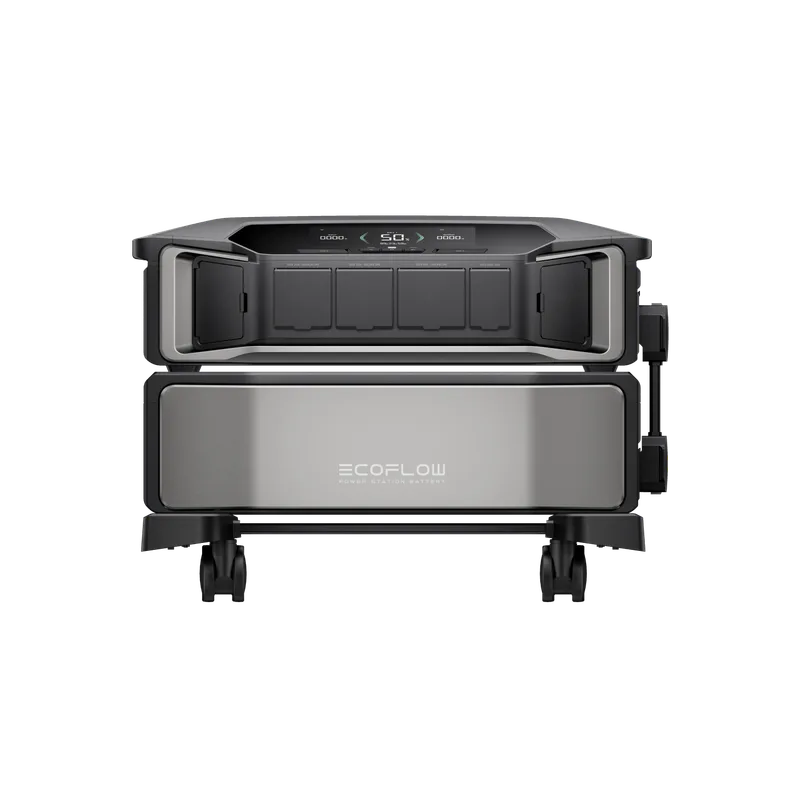
EcoFlow Delta Pro Ultra
From $4,199
VS
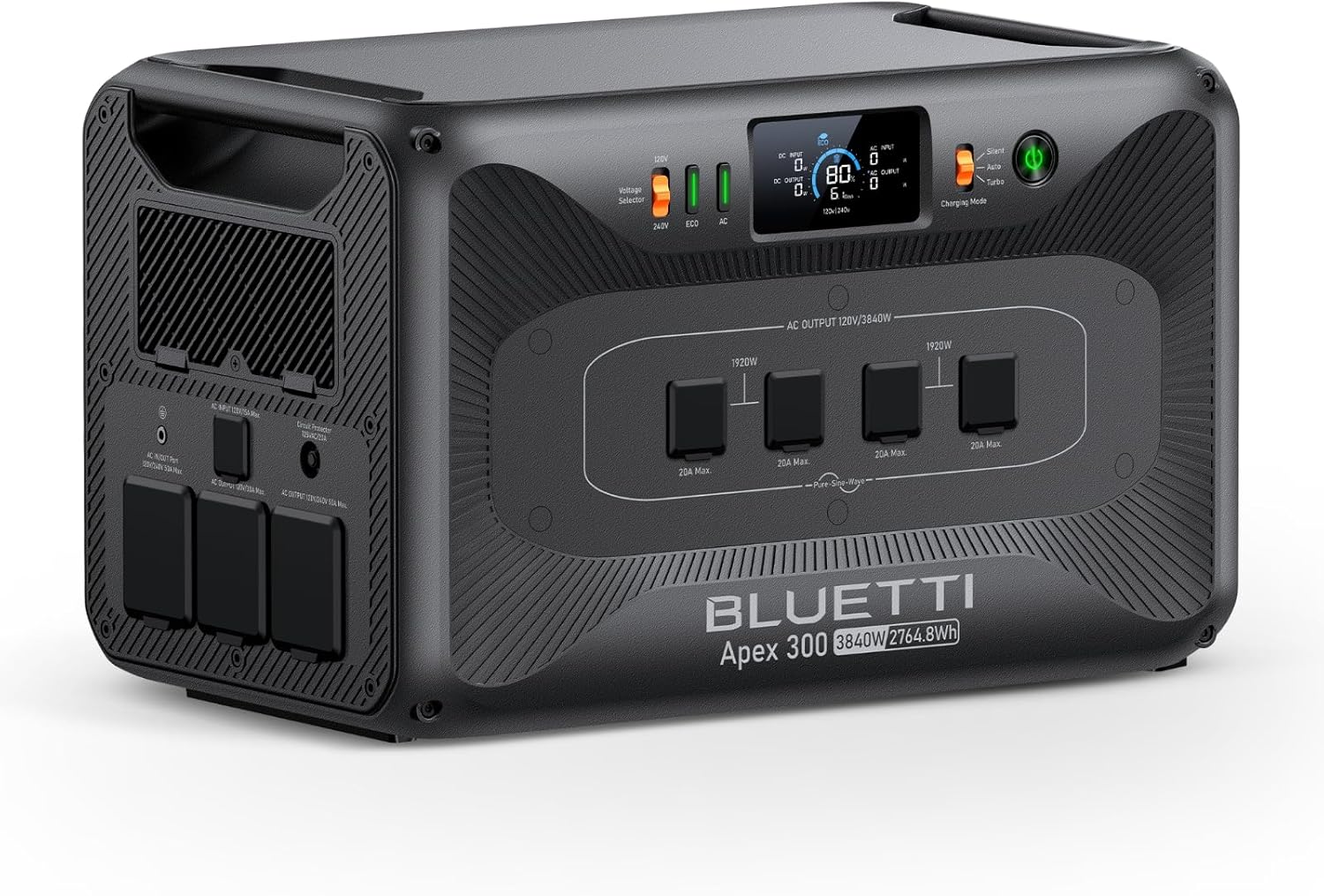
Bluetti Apex 300
From $1,498.98
Quick Answer
EcoFlow Delta Pro Ultra wins overall
Design Philosophy and Form Factor
Winner: Design Philosophy and Form Factor
EcoFlow Delta Pro Ultra
Output Capacity and Load Starting
Starting a massive 3-ton central air conditioning compressor requires a shocking surge of inrush current (LRA - Locked Rotor Amps) that instantly trips the internal safety breakers of typical portable power stations. The EcoFlow Delta Pro Ultra was explicitly engineered to solve this. A single unit boasts an incredible 7.2kW of continuous output and can effortlessly start heavy inductive loads like massive well pumps and central HVAC systems, completely independent of the power grid.
Winner: Output Capacity and Load Starting
EcoFlow Delta Pro Ultra
Plugs, Ports, and Mobile Flexibility
While both are categorized as "portable," these are massive, stationary systems weighing several hundred pounds once assembled. However, Bluetti shines in its faceplate design. It natively incorporates the NEMA 14-50R (120/240V, 50 amp) and a NEMA TT-30R (120V, 30 amp) plug directly on the front panel of the head unit without requiring any external adaptor hubs. This makes it an absolute dream for boondocking RV owners or off-grid cabin dwellers looking to just plug in their primary massive power cable immediately.
Winner: Plugs, Ports, and Mobile Flexibility
Bluetti Apex 300
Final Verdict
Integrated Smart Home Ecosystems vs Raw Value
Choosing between the EcoFlow Delta Pro Ultra and the Bluetti Apex 300 determines whether you are building a fully integrated, automated smart-grid for your suburban home, or starting cheaper and scaling as you go. If you intend to hire a licensed electrician to wire the battery stack directly into a proprietary smart electrical panel to automatically shed high-draw loads during a neighborhood blackout, the EcoFlow Delta Pro Ultra ecosystem is lightyears ahead of its competitors in polishing that complex software experience, and its single-unit 7.2kW output starts well above the Apex 300's 3.84kW base. However, if you want a much lower entry price, a native NEMA 14-50R plug for RV or workshop use, and the flexibility to expand the same modular umbilical-cord system all the way to 100kWh over time, the Bluetti Apex 300 is the more affordable way in.
Frequently Asked Questions
Absolutely not. They use highly proprietary communication cables and internal battery management systems (BMS). Mixing and matching hardware across different massive electrical ecosystems is a massive fire hazard.
These systems both utilize incredibly advanced LiFePO4 (Lithium Iron Phosphate) chemistry. They are rated for 3,500 entire drain-to-zero lifecycles before degrading to 80% capacity. This effectively represents 10 to 15 years of hardcore daily off-grid use.