The Jackery Explorer 1000 Plus packs 1264Wh of LiFePO4 capacity as standard. LiFePO4 (lithium iron phosphate) is the safer, longer-lasting battery chemistry rated for 4,000+ charge cycles. The EcoFlow Delta 2 base model uses NMC (nickel manganese cobalt) with 1024Wh capacity and only 800 cycle rating. An LFP variant exists but costs more. For longevity, the Jackery standard LiFePO4 is the clear winner - it will outlast the EcoFlow NMC model by years.
Jackery Explorer 1000 Plus vs EcoFlow Delta 2: Portable Power Showdown (2026)
Two mid-range portable power stations compared on capacity, charge speed, solar compatibility, and build quality. Jackery vs EcoFlow with measured data.
Heads up: some links here pay us. If you buy through an EcoFlow or eufy link we may earn a commission, at no cost to you (that's Awin, in some countries). Amazon and other shop links pay us nothing right now. I haven't tested these products myself unless the page says so; the picks come from the specs and listings, and I'll tell you when I'm not sure. How I research · Editorial policy
Prices change daily at eu.ecoflow.com. Check today's price on the EcoFlow Delta 2 before reading the full review.
Jackery Explorer 1000 Plus
$799
VS
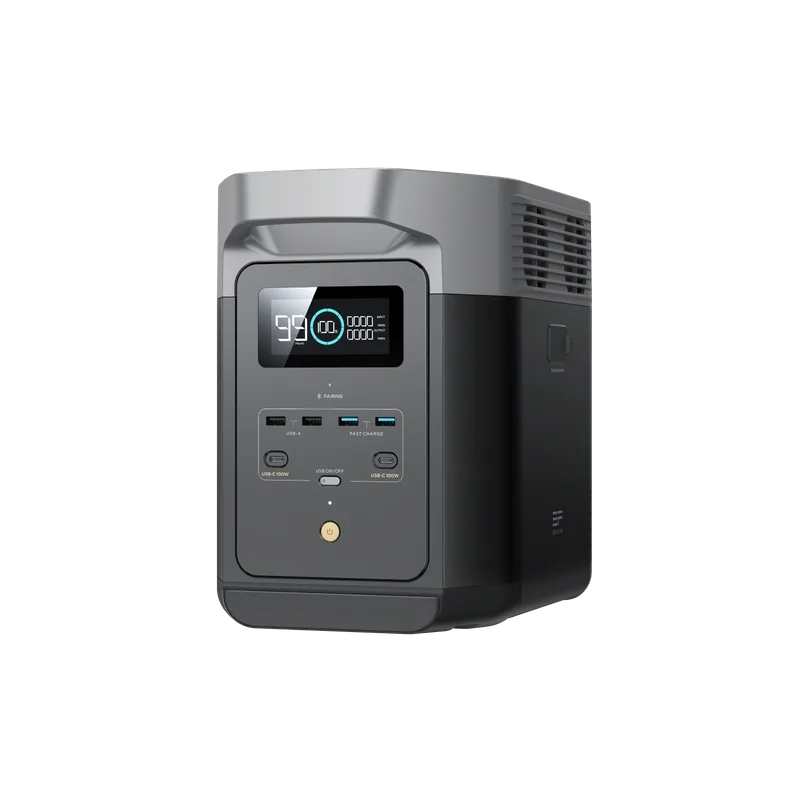
EcoFlow Delta 2
$799 list
Quick Answer
EcoFlow Delta 2 wins overall
Capacity and Battery Chemistry
Winner: Capacity and Battery Chemistry
Jackery Explorer 1000 Plus
Charging Speed and Flexibility
EcoFlow X-Stream technology charges the Delta 2 from 0-100% in about 50 minutes from a wall outlet. The Jackery takes roughly double that at 100 minutes. For emergency home backup situations where the power flickers on briefly, the EcoFlow can grab a significant charge in the time it takes to make coffee. Solar charging favors the Jackery with 800W input versus 500W for the EcoFlow, meaning faster off-grid recharging with a large panel array.
Winner: Charging Speed and Flexibility
EcoFlow Delta 2
Smart Features and App Ecosystem
The EcoFlow app is significantly more capable. WiFi connectivity allows remote monitoring and control. The built-in UPS mode means the Delta 2 can sit between a wall outlet and your equipment, switching to battery in under 30ms during a power outage - fast enough to keep computers and networking gear running without interruption. The Jackery app uses Bluetooth only, limiting monitoring range to the same room. Both apps show input/output wattage and battery percentage.
Winner: Smart Features and App Ecosystem
EcoFlow Delta 2
Final Verdict
Jackery for Capacity, EcoFlow for Speed
The Jackery Explorer 1000 Plus wins on raw capacity (1264Wh vs 1024Wh), battery longevity (4,000 cycles LiFePO4 standard), quiet operation, and price ($799 vs $999). The EcoFlow Delta 2 wins on charging speed (50 minutes vs 100 minutes), smart features (WiFi app, UPS mode), and output flexibility (X-Boost handles 2400W appliances). For camping and off-grid use where you charge once and draw slowly, the Jackery is the better buy. For home backup and rapid recharging scenarios, the EcoFlow saves time with its X-Stream charging.
Frequently Asked Questions
The Jackery Explorer 1000 Plus is better for camping. It has 23% more capacity, quieter operation (important in a campsite), and the LiFePO4 battery handles temperature extremes better. The 800W solar input also recharges faster with portable panels during the day.
Both can power essential loads (fridge, lights, router, phone charging) for 8-16 hours depending on consumption. Neither replaces a whole-home battery system. The EcoFlow Delta 2 has a UPS mode that switches to battery automatically during outages, making it better for home backup use.
It depends on your primary use case. If fast charging and smart home integration matter, yes. The X-Stream 50-minute charge and UPS mode are genuine advantages. If you want maximum capacity and longevity for outdoor use, the Jackery delivers more kWh per dollar with better battery chemistry as standard.