The primary reason to spend $4000+ on a CO2 laser over a $500 Diode laser is cutting clear acrylic. Diode lasers simply pass right through transparent material without heating it. Both the xTool (55W) and Glowforge Pro HD (45W) use invisible infrared CO2 beams that instantly vaporize acrylic. The xTool P2S, with its extra 10 watts of raw power, can achieve single-pass cuts on thicker material (up to 18mm walnut and 20mm acrylic) at noticeably faster carriage speeds, drastically increasing your daily production rate if you are fulfilling massive holiday orders.
xTool P2S vs Glowforge Pro HD: Desktop CO2 Laser Showdown (2026)
xTool P2S wins with 55W cutting power and local-network flexibility. Two premium desktop CO2 lasers compared for Etsy creators and workshops.
Heads up: some links here pay us. If you buy through an EcoFlow or eufy link we may earn a commission, at no cost to you (that's Awin, in some countries). Amazon and other shop links pay us nothing right now. I haven't tested these products myself unless the page says so; the picks come from the specs and listings, and I'll tell you when I'm not sure. How I research · Editorial policy
Prices change daily at xtool.com. Check today's price on the xTool P2S 55W CO2 Laser before reading the full review.

xTool P2S 55W CO2 Laser
$4,499
VS
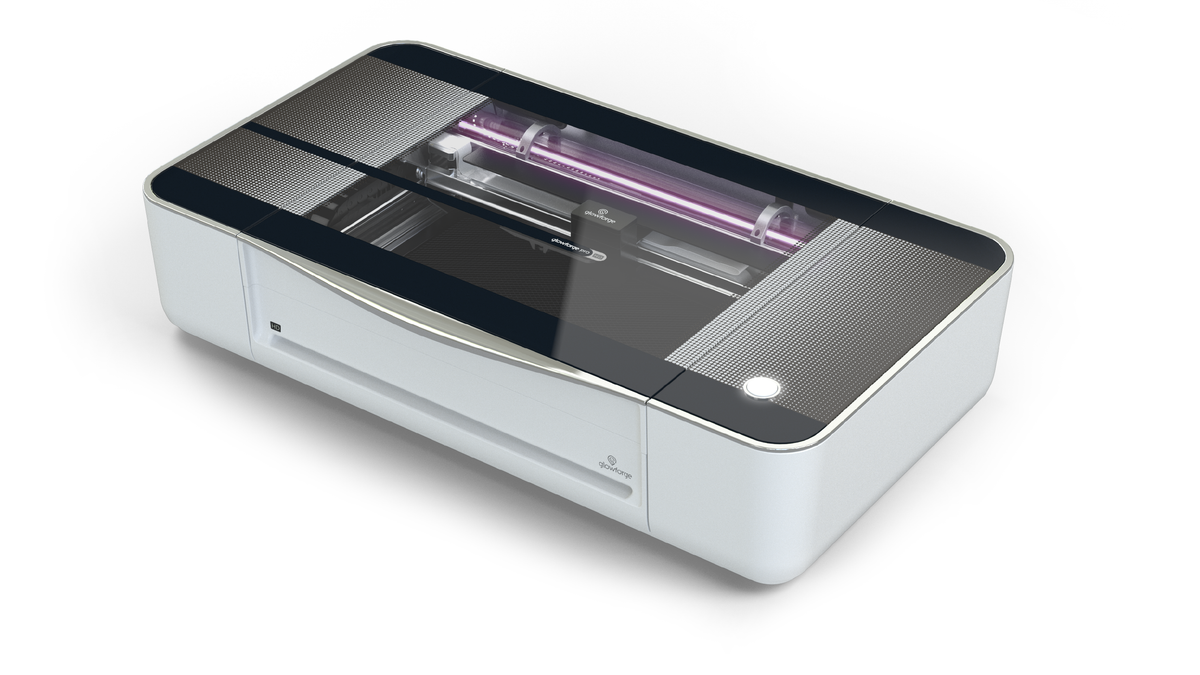
Glowforge Pro HD
$7,999
Quick Answer
xTool P2S 55W CO2 Laser wins overall
Cutting Power and Material Thickness
Winner: Cutting Power and Material Thickness
xTool P2S 55W CO2 Laser
Camera Alignment and Workflow
Placing your design precisely on an expensive sheet of Proofgrade wood is terrifying. Glowforge pioneered the internal lid camera, taking a picture of the bed so you could drag your vector art directly onto the wood in the software - the current Pro HD upgrades this to Live Camera View HD with a Preview Mode that shows your result before you print. xTool took the original concept further still: the P2S utilizes dual 16MP cameras - one wide-angle for the whole bed, and a second mounted directly to the laser head - giving precise alignment that eliminates wasted material from misaligned cuts.
Winner: Camera Alignment and Workflow
xTool P2S 55W CO2 Laser
Software and Cloud Dependency
This is the most polarizing divide in the prosumer laser community. Glowforge operates entirely through web-based software in a browser. It is slick, requires zero software installation, and runs on a Chromebook or iPad. However, if your WiFi goes down or Glowforge's servers have an outage, an $8,000 machine cannot print until service is restored. xTool uses a downloadable desktop application (xTool Creative Space) that connects locally via USB or local WiFi, so production continues regardless of internet stability.
Winner: Software and Cloud Dependency
xTool P2S 55W CO2 Laser
Final Verdict
Raw Power vs Infinite Length
If you are starting a small Etsy business making custom acrylic signs, leather wallets, or engraved tumblers, the xTool P2S offers a significantly better value proposition. At $3,500 cheaper, it provides 10W more core cutting power, strong dual-camera placement tracking, and offline, local-network cutting abilities via xTool Creative Space. However, if your absolute, non-negotiable requirement is cutting 8-foot long wooden planks for massive architectural models or giant wedding signs, the Glowforge Pro HD remains uniquely suited to the task due to its Pro Passthrough design.
Frequently Asked Questions
Absolutely. CO2 lasers vaporize wood, leather, and plastic. Cutting produces fumes, particularly from acrylics, so each machine needs venting: either run the flexible exhaust hose out a nearby window, or buy the internal air filtration unit sold for the machine, which costs extra.
Neither of them can. CO2 lasers operate on a wavelength perfect for organic materials (wood, leather, acrylic, rubber). If you want to deeply engrave or cut steel, brass, or aluminum, you need an entirely different technology called a Fiber Laser.