This is the section that decides it. EcoFlow no longer sells the Delta 2 in the US, and its US product page redirects to the Delta 3. The Delta 3 lists at $699 and EcoFlow runs it on sale often, with $599 the Prime Day Fall Sale price at the time of this update (September 20 to October 5, 2026). The Delta 2 listed at $799 when it was current. So the replacement is both newer and cheaper, which is unusual and worth saying plainly. The Delta 2 is still sold through EcoFlow's European store and by third-party sellers, and if one of those turns up at a steep discount it can be a sensible buy. At anything close to list, it cannot.
EcoFlow Delta 3 vs Delta 2 (2026)
The Delta 3 wins: cheaper, longer-lived, and the Delta 2 is now discontinued in the US. EcoFlow Delta 3 vs Delta 2 compared for 2026, and when a Delta 2 still makes sense.
Heads up: some links here pay us. If you buy through an EcoFlow or eufy link we may earn a commission, at no cost to you (that's Awin, in some countries). Amazon and other shop links pay us nothing right now. I haven't tested these products myself unless the page says so; the picks come from the specs and listings, and I'll tell you when I'm not sure. How I research · Editorial policy
Prices change daily on Amazon. Check today's price on the EcoFlow Delta 3 before reading the full review.Paying link: we may earn a commission. See the note above.
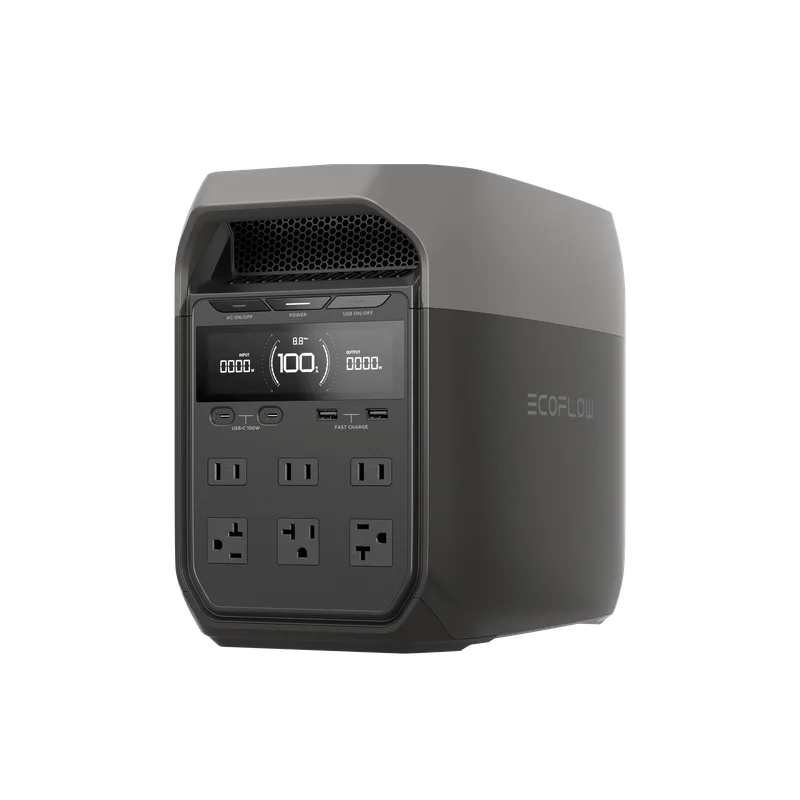
EcoFlow Delta 3
$599 sale
VS
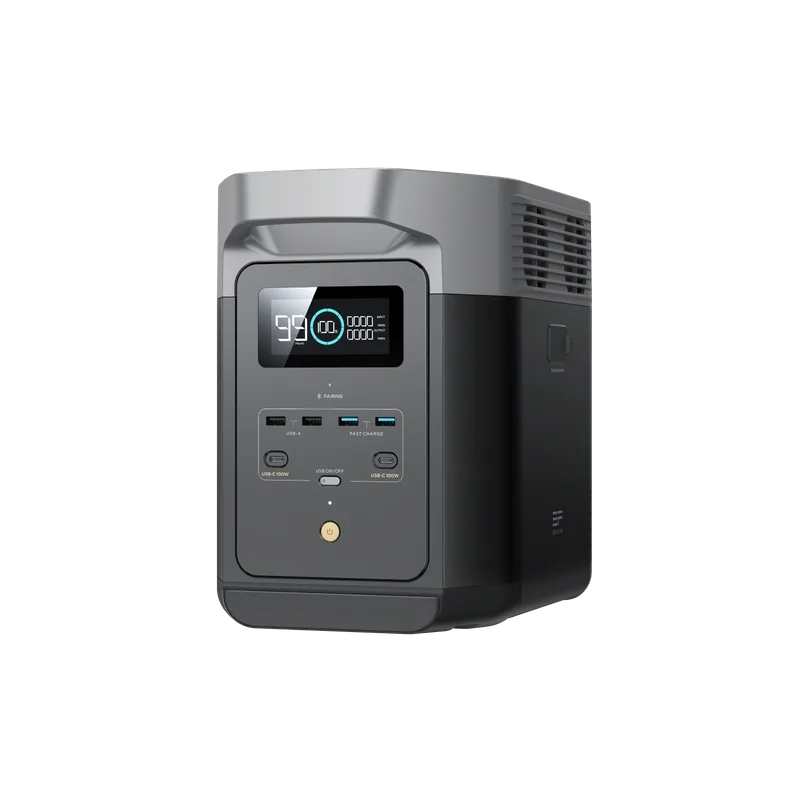
EcoFlow Delta 2
$799 list
Quick Answer
EcoFlow Delta 3 wins overall
Availability and Price
Winner: Availability and Price
EcoFlow Delta 3
Battery Chemistry and Lifespan
Both units use LiFePO4 chemistry, which is the safer, longer-lived choice against standard lithium-ion. The Delta 3 is rated for 4000 cycles to 80% capacity, the Delta 2 for 3000. Cycling fully every day, that is roughly eleven years on the Delta 3 against eight on the Delta 2. For occasional camping or backup use either is effectively indefinite, but for daily solar cycling or a home that loses power often, the extra thousand cycles is real.
Winner: Battery Chemistry and Lifespan
EcoFlow Delta 3
AC Output and Appliance Compatibility
Continuous AC output is 1800W on both, so for the ordinary backup load of a fridge, lights, a router and a couple of laptops they are equivalent. The difference is in the boost modes. The Delta 2's X-Boost runs a single high-draw appliance up to 2700W; the Delta 3's X-Boost tops out at 2200W but adds a 3600W surge rating for the moment a motor starts. If your use case is one hair dryer or one space heater, the Delta 2 has a little more headroom. If it is starting a compressor, the Delta 3's surge rating is the more useful number.
Winner: AC Output and Appliance Compatibility
EcoFlow Delta 2
Charging Speed and App Control
The Delta 3 recharges fully from the wall in 56 minutes at 1500W input, which makes topping up between outages or before a trip genuinely quick. The Delta 2 reaches about 80% in 50 minutes and takes longer to finish. Both have Wi-Fi and Bluetooth with full EcoFlow app control for charge state, charging speed limits and scheduling. The Delta 3 receives firmware attention as the current model; the Delta 2 will get less as it ages out.
Winner: Charging Speed and App Control
EcoFlow Delta 3
Final Verdict
The Delta 3, and It Is No Longer Close
When this comparison was first written the question was whether the Delta 3 justified a premium over the Delta 2. That question no longer exists. The Delta 3 lists at $699 and sells for less, the Delta 2 listed at $799, and EcoFlow has discontinued the Delta 2 in the US. The newer unit has a third more cycle life, charges faster, and matches the older one on continuous output. Buy the Delta 3. The Delta 2 is worth considering in exactly two cases: a clearance or used price that sits well below the Delta 3, or an existing set of Delta 2 extra batteries that you want to keep using. If neither applies, there is nothing the Delta 2 does that should pull you toward it.
Frequently Asked Questions
In the US, yes. EcoFlow no longer lists it on the US store, and the old product URL redirects to the Delta 3. It remains on sale through EcoFlow's European store and from third-party sellers, and existing units are fully supported. If you own one there is no reason to replace it.
No, it is cheaper. The Delta 3 lists at $699 and is frequently on sale below that; the Delta 2 listed at $799 while it was current. The Delta 3 also has a third more cycle life and faster charging. The only reason to pay more for a Delta 2 would be a clearance price that has not kept up, which is worth checking rather than assuming.
Solar panels work with both units through the XT60 input, up to 500W. Extra batteries are not cross-compatible: the Delta 3 uses an updated communication protocol, so Delta 2 and Delta Max batteries will not extend a Delta 3. That is the single strongest reason to stay on the Delta 2 if you already own its batteries.
The Delta 3, for a new purchase. Continuous output is identical at 1800W, so both run the same household load, and the Delta 3 adds a 3600W surge rating for appliances with motors, longer cycle life, and a full recharge in under an hour once power returns. The Delta 2 only wins if you need its 2700W X-Boost for a single very high-draw appliance and can find it cheaply.